
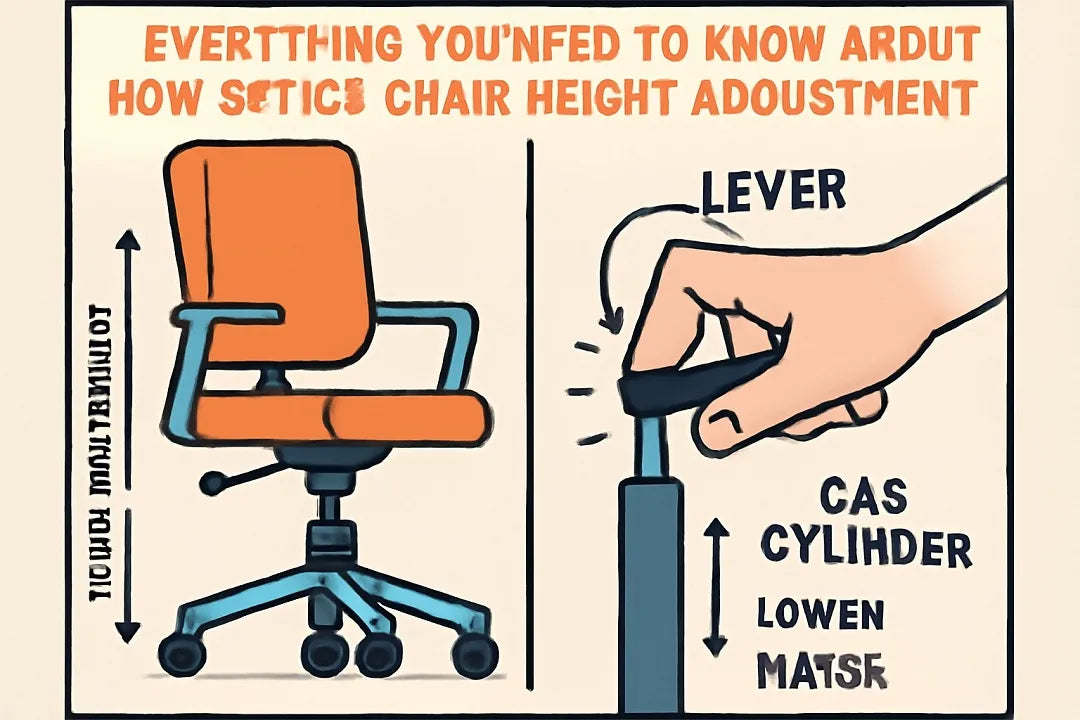
Most office workers adjust their chair height without thinking twice. Pull the lever, sit down, stand up, done.
But very few people actually understand how an office chair height adjustment works, even though they rely on it for hours every single day.
After more than 20 years working in the office furniture and workspace design industry, I can confidently say this:
a chair’s height adjustment system is not a small detail. It is the foundation of comfort, safety, and long-term durability.
If you truly want to understand what makes a good ergonomic office chair, this is where it starts.
Why Height Adjustment Is Essential in Modern Office Chairs
Years ago, office chairs were fixed-height. People adjusted their bodies to the chair, not the other way around.
Today, that approach simply doesn’t work.
Different users have different heights, desk setups, and work habits. Without proper height adjustment, problems quickly show up:
- Poor blood circulation in the legs
- Unsupported lower back and spinal strain
- Shoulder and neck tension over long workdays
That’s why adjustable office chairs have become a global standard. In modern workplaces across the United States, Europe, and Asia, height adjustment is no longer a premium feature. It’s a basic requirement for health and productivity.
From a professional standpoint, office chair height adjustment mechanisms are a core part of ergonomic design, not an accessory.
Gas Lift Office Chair Height Adjustment Explained (The Industry Standard)
The Gas Lift Is the Real Heart of the Chair
When people talk about a “gas lift office chair,” they’re referring to the internal component that actually controls height.
This part is called a gas lift cylinder or office chair gas spring.
It may look simple from the outside, but in reality, it determines whether a chair feels:
- Smooth and stable
- Safe under daily use
- Durable over many years
In professional manufacturing, the gas lift is one of the most critical quality checkpoints.
How a Gas Lift Office Chair Actually Works Inside the Chair
A common misconception is that gas lifts work like basic springs. They don’t.
Here’s the real office chair gas lift mechanism, explained simply:
- The cylinder is filled with high-pressure nitrogen gas, not regular air
- A piston with a small internal passage keeps pressure equal on both sides
- The piston rod side has a smaller surface area than the opposite side
Because pressure stays equal but surface areas differ, the gas naturally creates an upward force.
When you sit on the chair and pull the height adjustment lever, a valve inside the gas lift opens. Your body weight pushes the chair down smoothly and evenly.
Release the lever, the valve closes, and the chair locks firmly at that height.
This is why a well-built gas lift office chair can stop at virtually any height without drifting.
Gas Lift Sealing Systems and Why They Matter
Over time, the biggest threat to any gas lift is leakage.
If sealing components are poorly designed, you’ll notice problems like:
- The chair slowly sinking while you sit
- Height adjustment no longer holding properly
- Reduced lifespan after extended use
Professional-grade gas lifts use multi-layer sealing systems made from wear-resistant and corrosion-resistant materials. These seals keep the high-pressure nitrogen contained and ensure long-term stability.
This is also why reputable manufacturers rely on BIFMA-certified gas lifts and testing standards such as SGS or TÜV when selling chairs in the U.S. and European markets.
Hydraulic Office Chair Height Adjustment: When Is It Used?
While gas lifts dominate the market, hydraulic office chair height adjustment systems still exist in certain applications.
Hydraulic systems use pressurized oil rather than gas. Their key advantages include:
- Higher load-bearing capacity
- Extremely smooth vertical movement
- Strong performance in specialized environments
You’ll typically find hydraulic height adjustment systems in:
- Heavy-duty task chairs
- Medical or laboratory seating
- Industrial or technical workspaces
For standard office environments, gas lift office chairs remain the most practical and cost-effective choice.
Mechanical Office Chair Height Adjustment: Old but Reliable
Mechanical height adjustment office chairs rely entirely on physical components like:
- Threaded screw mechanisms
- Gear-driven systems
- Manual rotation or pedal controls
They are durable and don’t depend on gas or fluid pressure, but they come with trade-offs:
- Slower adjustment
- Less convenience
- Limited ergonomic flexibility
Today, mechanical systems are mainly used in niche applications rather than modern office setups.
Why Office Chair Height Adjustment Matters From an Ergonomic Perspective
From an ergonomic standpoint, proper chair height directly affects:
- Natural spinal alignment
- Thigh-to-floor angle
- Foot contact with the ground
A well-designed ergonomic office chair height adjustment system allows users to fine-tune their seating position with minimal effort. Over time, this reduces fatigue, improves posture, and supports long-term health.
Final Thoughts:
After decades in the office furniture industry, one lesson stands out clearly:
a chair is only as good as its height adjustment mechanism.
Materials, appearance, and branding may catch attention, but stability, safety, and durability come from what’s inside the chair.
Understanding how office chair height adjustment works helps buyers make smarter decisions and helps users appreciate the engineering behind a product they rely on every day.
A truly professional office chair proves its value not through flashy design, but through consistent, dependable performance where it matters most.
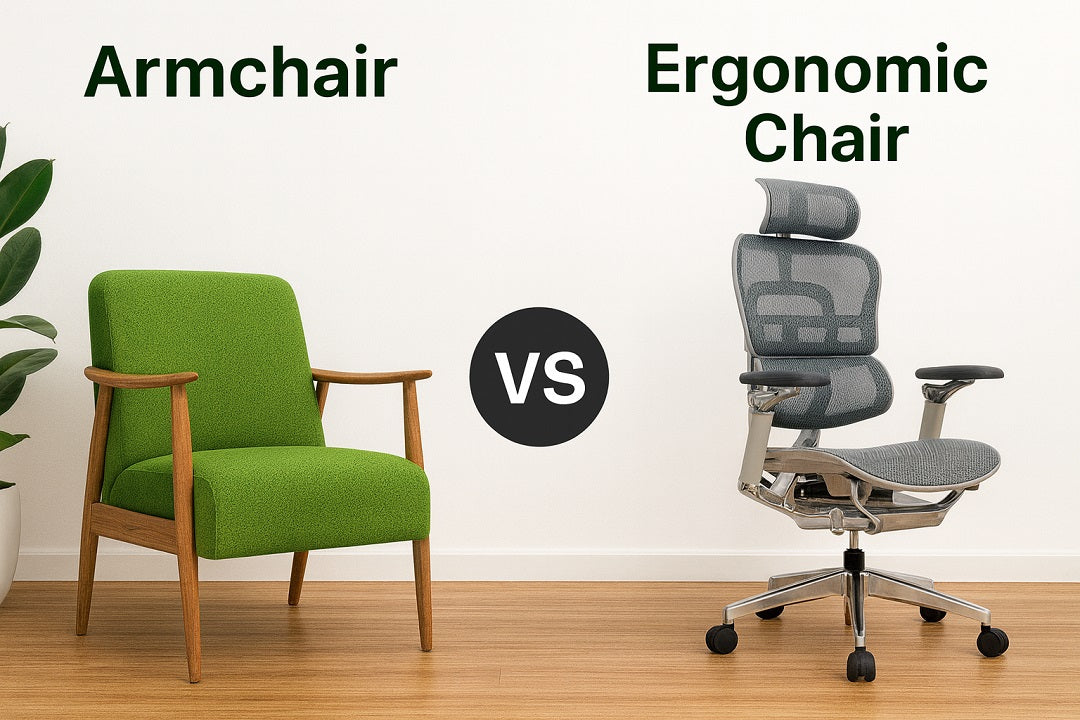
Read more:: Armchair vs. Ergonomic Chair: Which Is Best for Your Space?
FAQs
1.How does an office chair adjust height?
An office chair adjusts height using a gas lift mechanism filled with high-pressure nitrogen. When the height adjustment lever is activated, a valve inside the gas lift opens, allowing the chair to move up or down smoothly based on the user’s weight. Releasing the lever locks the chair at the selected height, providing stable and controlled support for everyday office use.
2.What is a gas lift in an office chair?
A gas lift office chair mechanism is the internal cylinder that controls height adjustment. It contains compressed nitrogen gas and a piston system that allows the chair to move up or down smoothly. Most modern ergonomic office chairs use gas lifts because they are reliable, safe, and easy to adjust.
3.Why does my office chair slowly sink when I sit on it?
If an office chair slowly sinks, it usually means the gas lift cylinder is worn or leaking. Over time, internal seals can degrade, especially in low-quality gas lifts. Once pressure can no longer be held, the chair won’t maintain its height properly.
4.Can you replace a gas lift on an office chair?
Yes, in most cases, a gas lift cylinder can be replaced without changing the entire chair. Many professional office chairs are designed with removable gas lifts, making maintenance more cost-effective and extending the product’s overall lifespan.
5: How long does an office chair gas lift last?
On average, a high-quality office chair gas lift can last 5 to 10 years, depending on usage, weight load, and manufacturing quality. Chairs used in commercial offices or by heavier users may require replacement sooner if the gas lift is not rated for higher capacity.
Further reading
BIFMA International. (2020). ANSI/BIFMA X5.1 Office Seating Standard.
BIFMA International.
https://www.bifma.org/page/X5_1
Occupational Safety and Health Administration. (n.d.). Computer workstation ergonomics.
U.S. Department of Labor.
https://www.osha.gov/etools/computer-workstations
National Institute for Occupational Safety and Health. (2015). Elements of ergonomics programs: Musculoskeletal disorders and workplace factors.
Centers for Disease Control and Prevention (CDC).
https://www.cdc.gov/niosh/docs/97-117/
Cornell University Ergonomics Web. (2016). Office ergonomics: Chair height, posture, and seated comfort.
Cornell University.
https://ergo.human.cornell.edu/ergoguide.html

Leave a comment
All comments are moderated before being published.
This site is protected by hCaptcha and the hCaptcha Privacy Policy and Terms of Service apply.